
.gif)
European Journal of Case Reports and Clinical Images
European Journal of Case Reports and Clinical Images
Review Article | Open Access
Volume 2025 - 1 | Article ID 231 | http://dx.doi.org/10.51521/EJCRCI.2025.e11.107
Academic Editor: John Bose
Dr. Sci. Tsuneo Ishida1 and
Reiko Kobayashi2
1(Former) Teikyo University, Aerospace
Engineering Department, Prof. Retired, Own’s Home Researcher; 2-3-6, Saido,
Midori-Ku, Saitama-Shi, Saitama-Ken, ?336-0907, Japan.
2Chemistry Teacher MC. Reiko Kobayashi;
Kumagaya Woman High School Anti-Bacterial Metal-Sulfates and Nitrates Halo-Test
Research Group, 2-131, Suehiro-Chou, Kumagaya-Shi, Saitama-Ken, ?360-0031, Japan.
Corresponding author: Dr. Sci. Tsuneo Ishida, Teikyo University, Aerospace Engineering
Department, Prof. Retired, Own’s Home Researcher; 2-3-6, Saido, Midori-Ku,
Saitama-Shi, Saitama-Ken, ?336-0907, Japan.
Citation: Dr. Sci. Tsuneo Ishida and Reiko Kobayashi (2025). Bacteriolytic
Clearance for Zinc Sulfate Induced Peptidoglycan Cell Wall Destruction on
Autolytic Cleavage, Hydrolysis and Degradation against S. Aureus. Euro J Case
Rep Clin Imag. 2025; Nov, e11,1-8.
Copyrights © 2025, Dr. Sci. Tsuneo Ishida., et al., This article is licensed
under the Creative Commons
Attribution-Non-Commercial-4.0-International-License-[CCBY-NC] [https://europeanjournalofcasereports.com/blogpage/copyright-policy].
Usage and distribution for commercial purposes require written permission.
Nursing, Nagpur, India
Abstract:
Bacterial peptidoglycan (PGN) cell wall
clearance on autolysin cleavage, hydrolysis, and degradation by zinc sulfide
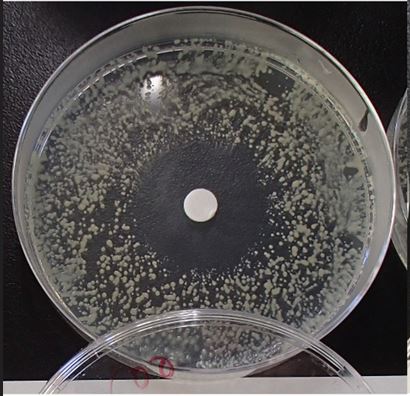
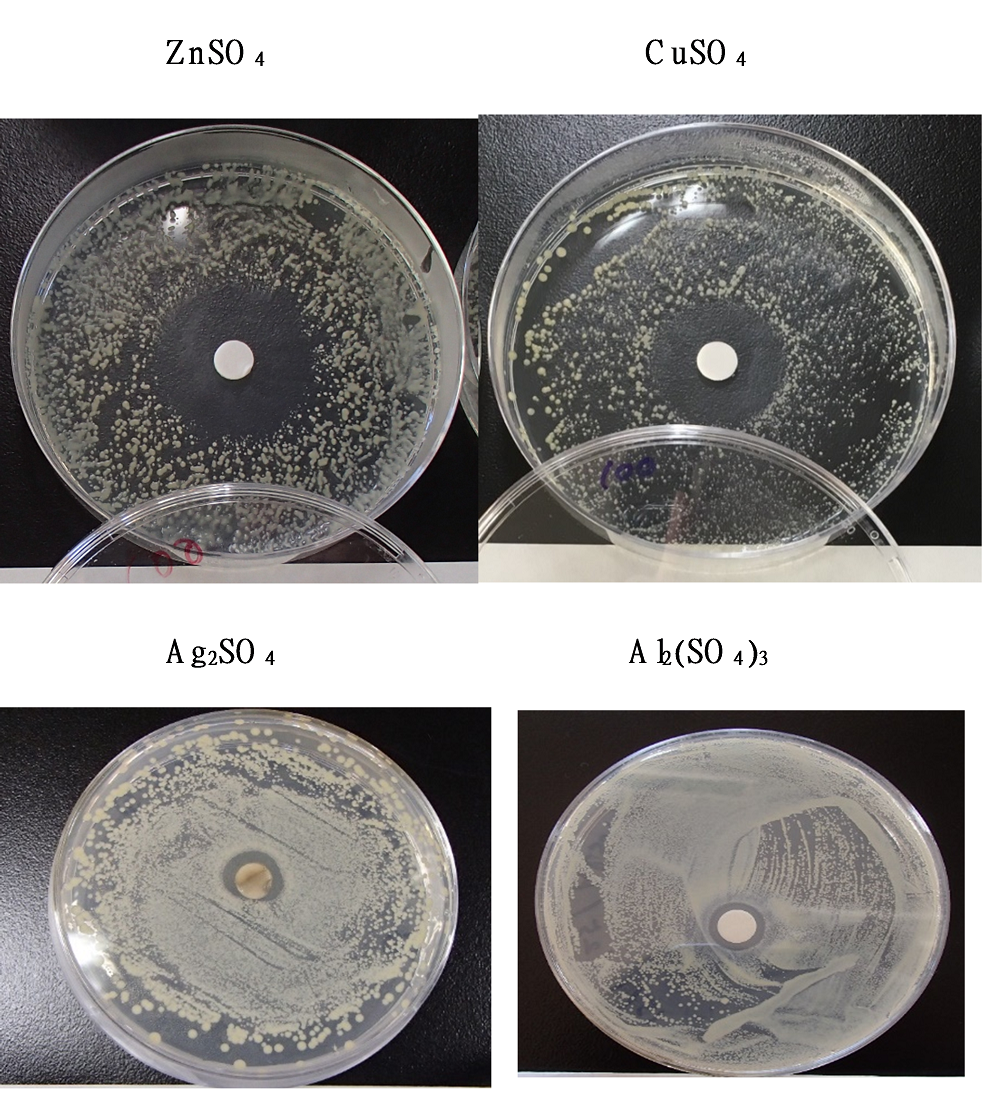
solution has been investigated on the ground of the results obtained from halo
antibacterial susceptibility tests in metal sulfate solutions against
Staphylococcus Epidermidis, in which the order of antibacterial effect in the
metal sulfate solutions is Zn2+?Cu2+?Ag+?Al3+ and the highest antibacterial activity is found to be the zinc
sulfate (ZnSO4) solution with a strong acid or strong electrolyte.
PGN autolytic cleavage by
zinc-containing autolysin amidase: AmiE,
Rv3717, AmiA: Zn2+ ions in ZnSO4 solution can cleave bacterial PGN murein
chains that as PGN cleavage by Staphylococcal amidase autolysin, zinc dependent
metalloenzyme AmiE is efficient as prevention of the pathogen growth. The
other, Zn2+ binding AMIDASE Rv3717 showed no activity on polymerized PGN and
however, it is induced to a potential role of N-Acetylmuramyl L-alanine
Amidase. PGN cleavage by zinc-binding autolysin Staphylococcus aureus Amidase
is involved that AmiA shed light on PGN binding and cleavage.
PGN hydrolysis by zinc-containing
enzymes: PGN murein hydrolase activity is
involved that PGN hydrolysis by Zn2+-containing catalysis is consistent in
peptidoglycan recognition proteins (PGRPs), PGN murein hydrolase activity and
generalized autolysis. Amidase MurA, LytA amidase, the major murein hydrolase
of S. pneumoniae are considered an important virulence facto that A
glycylglycine endopeptidase LytM and LytB of enzymatically active domain of
autolysin are necessary for its optimal activity toward peptidoglycan
hydrolysis and for pneumococcal adhesion to respiratory epithelial cells.
PGN degradation by inhibitive PGN
elongation: Zinc ions-induced PGN inhibitive
elongation occurs due to inhibitory TG enzyme and activated autolysin against S
aureus. Inhibition of PGN elongation due to the activated Zn2+ binding Rv3717
autolysins showed no activity on polymerized PGN and but, it is induced to a
potential role of N-Acetylmuramyl L-alanine Amidase. Thus, zinc(?) inhibits PGN biosynthesis, activates PGN autolysin, and inhibits PGN
elongation against S. aureus cell wall, in which zinc induced PGN autolytic
cleavage and hydrolysis by activated autolysins, respectively, of AmiE, Rv3717
and PGRPs, MurA, LytA, LytM-endopeptidase, hydrolase LytB can be promoted, and then
causing PGN autolysin cleavage, hydrolysis, degrading, and leading PGN
bactericidal dissolution.
Keywords: Zinc(?), Halo-test, Zinc sulfate, PGN autolysin and elongation, S. aureus PGN
cleavage, hydrolysis, and degradation.
Abbreviation: CV=Carvacrol, CMC=chitosan metal complex, COVID-19=coronavirus
disease of 2019, Eps=endopeptidase, ICU=intensive care unit, PGN=peptidoglycan,
PGRPs=peptidoglycan recognition proteins, PTEN=403 amino acids, LYS1=Lysozyme1,
MIC=minimum inhibitory concentration, MBC=minimum bactericidal concentration,
PRRs=pattern recognition receptor, TG=Transglycosylase, TP=Transpeptidase.


.png)








.jpg)


.png)